
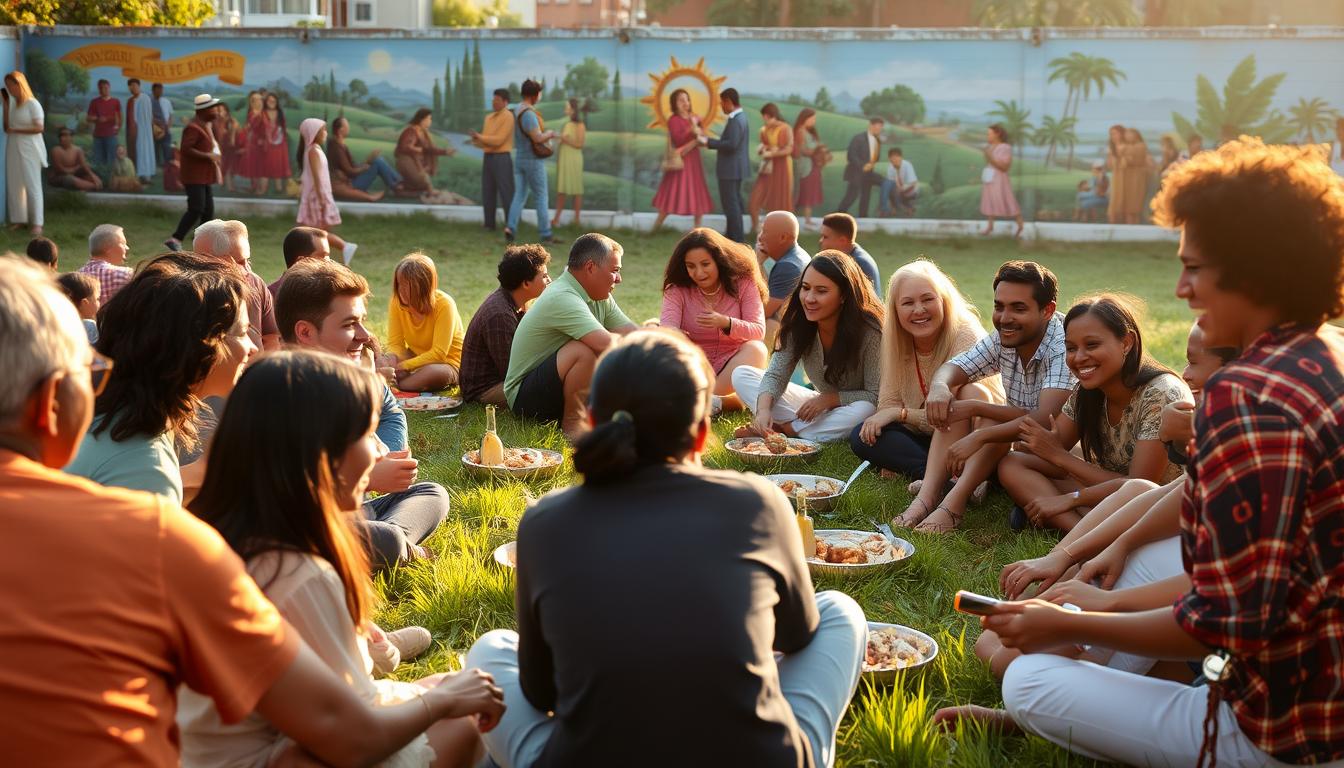
Bringing People Together: Cultivating Love and Unity
In today’s world, the importance of coming together as a community cannot be overstated. As stated, “How good and pleasant it is when God’s people live together in unity!” This sentiment highlights the value of fostering community harmony and togetherness.
Cultivating a sense of unity in the community is essential for creating a supportive and inclusive environment. When individuals come together, they can achieve far more than they could alone.
Key Takeaways
- Unity is crucial for a harmonious community.
- Fostering community harmony leads to a more supportive environment.
- Cultivating love and unity benefits everyone involved.
- A united community can achieve more together.
- Inclusivity is key to a strong, united community.
The Power of Connected Communities
In a world where divisions often seem insurmountable, the power of connected communities stands as a beacon of hope. Building strong community bonds is essential for creating a society where everyone feels a sense of belonging. When communities come together, they form a strong foundation for nurturing unity and connection among their members.
Connected communities are more resilient and better equipped to handle challenges. They provide a support system that is vital for the wellbeing of their members. By fostering an environment of understanding and empathy, communities can overcome even the most daunting obstacles.
Why Unity Matters in Today’s Divided World
In today’s world, where differences often lead to division, unity is more important than ever. The phrase “Unity brings strength. Division creates weakness” underscores the significance of coming together. When communities are united, they can achieve far more than they could in isolation.
Unity is not about uniformity; it’s about embracing diversity and working together towards common goals. By doing so, communities can build a stronger, more resilient fabric that benefits everyone.
The Psychological Benefits of Belonging
Feeling a sense of belonging is crucial for our mental and emotional wellbeing. Being part of a connected community provides individuals with a support network that can significantly enhance their quality of life. It helps reduce feelings of loneliness and isolation, promoting overall happiness.
The psychological benefits of belonging to a community are profound. It gives individuals a sense of purpose and identity, which is vital for their overall wellbeing. By building strong community bonds, we can create a more compassionate and understanding society.
Understanding Barriers to Community Connection
As we strive for a more connected world, it’s essential to understand the hurdles that impede community connection. Fostering community cohesion requires addressing the obstacles that prevent individuals from forming meaningful relationships with those around them.
Social Isolation in Modern America
Social isolation has become a growing concern in modern America. With increased mobility and the rise of suburban living, people are often left feeling disconnected from their neighbors and community. This isolation can have severe effects on mental and physical health, making it crucial to address.
Digital Disconnection in a Connected Age
Ironically, the age of digital connectivity has also led to a sense of disconnection among people. Over-reliance on digital communication can lead to a decline in face-to-face interactions, which are vital for building strong, meaningful relationships within a community.
Overcoming Prejudice and Misconceptions
Prejudice and misconceptions about different groups within a community can also create significant barriers to connection. By promoting understanding and empathy, communities can work to break down these barriers and foster a more inclusive environment. Empathy plays a crucial role in creating deep connections among people, allowing individuals to understand and appreciate each other’s perspectives.
| Barrier | Description | Impact |
|---|---|---|
| Social Isolation | Lack of personal connections and community engagement | Negative effects on mental and physical health |
| Digital Disconnection | Over-reliance on digital communication | Decline in face-to-face interactions and deepened feelings of loneliness |
| Prejudice and Misconceptions | Misunderstandings and biases towards different community groups | Creates divisions and hinders community cohesion |
Cultivating Love and Unity in the Community: Practical Approaches
Creating a harmonious community involves more than just good intentions. It requires practical strategies that foster unity and a sense of belonging among its members. By implementing inclusive practices and regular community gatherings, we can strengthen community bonds.
Creating Inclusive Spaces for All
Inclusive spaces are fundamental to cultivating a sense of belonging. This involves considering both physical accessibility and cultural inclusivity.
Physical Accessibility Considerations
Ensuring that community spaces are physically accessible to everyone, including those with disabilities, is crucial. This can be achieved by incorporating ramps, elevators, and accessible restrooms.
Cultural Inclusivity Practices
Cultural inclusivity involves celebrating diverse cultural backgrounds through events, decorations, and community programs. This helps create an environment where everyone feels valued.
Establishing Regular Community Gatherings
Regular community gatherings, such as weekly farmers’ markets or monthly potluck dinners, provide opportunities for residents to interact and build relationships. These events help in strengthening community relationships.
Celebrating Diversity as Strength
Celebrating diversity is essential to cultivating love and unity. By acknowledging and appreciating the different backgrounds and cultures within the community, we can foster a more harmonious and inclusive environment.
| Strategy | Benefits |
|---|---|
| Creating Inclusive Spaces | Fosters a sense of belonging, promotes diversity |
| Regular Community Gatherings | Strengthens community bonds, encourages social interaction |
| Celebrating Diversity | Promotes unity, enriches cultural heritage |
Successful Community Initiatives That Build Togetherness
From coast to coast, community initiatives are sprouting up to promote solidarity and harmony among neighbors. These programs are designed to bring people together, foster a sense of belonging, and cultivate love and unity within the community.
One of the most effective ways to build togetherness is through neighborhood programs that add a twist to traditional community activities. For instance, Neighborhood Watch Programs With a Twist are not just about safety; they also organize social events that help neighbors get to know each other.
Neighborhood Watch Programs With a Twist
These programs combine community policing with social activities, creating a safer and more connected neighborhood. By organizing potluck dinners, volunteer clean-up days, and other community events, Neighborhood Watch Programs help build trust and foster a sense of unity among participants.
Community Gardens and Shared Spaces
Community gardens and shared green spaces are another example of initiatives that bring people together. These spaces not only provide a place for residents to grow their own fruits and vegetables but also serve as community hubs where people can meet and interact. By working together to maintain these gardens, neighbors build relationships and a sense of community.
Intergenerational Programs That Connect
Intergenerational programs are designed to bridge the gap between different age groups within a community. These programs, which might include mentorship initiatives, intergenerational daycare, or community events that bring together people of all ages, help to foster understanding and empathy across generations. By connecting younger and older community members, these programs promote a sense of unity and shared purpose.
| Initiative | Benefits | Impact |
|---|---|---|
| Neighborhood Watch Programs | Safety, Social Events | Increased trust, Community bonding |
| Community Gardens | Green spaces, Community interaction | Environmental awareness, Neighborly connections |
| Intergenerational Programs | Mentorship, Age diversity | Understanding across ages, Shared community values |
By implementing these and other community initiatives, neighborhoods across the United States are promoting community solidarity and fostering harmony among their residents. These programs not only address specific community needs but also contribute to a broader sense of togetherness and unity.
Individual Actions That Foster Community Harmony
Individual efforts play a crucial role in nurturing unity and connection within communities. By taking simple actions, individuals can significantly contribute to building a harmonious community.
Being the Neighbor You’d Want to Have
Being a good neighbor is fundamental to community harmony. Simple acts like greeting your neighbors, offering help when needed, and being considerate of shared spaces can foster a sense of belonging and friendship.
Small Acts That Create Big Connections
Small acts of kindness, such as sharing meals or offering assistance, can create significant connections within a community. These actions demonstrate care and empathy, laying the groundwork for stronger community bonds.
Digital Community Building Strategies
In today’s digital age, online platforms can also be used to build community connections. Creating or participating in online forums, social media groups, and community apps can help individuals stay connected and support one another.
By combining these individual actions, communities can become more harmonious and connected, ultimately leading to a more supportive and unified environment for everyone.
Nurturing Unity Through Difficult Conversations
Nurturing unity in a community requires embracing difficult conversations as opportunities for growth. By doing so, we can foster a deeper understanding and respect among community members, ultimately strengthening our bonds.
Creating Safe Spaces for Dialogue
Creating an environment where individuals feel comfortable sharing their thoughts and concerns is crucial. This involves establishing ground rules for respectful conversation and ensuring that all voices are heard.
Conflict Resolution Strategies That Strengthen Bonds
Effective conflict resolution is key to maintaining unity. This can be achieved through:
Active Listening Techniques
Paying attention to the speaker, avoiding interruptions, and asking clarifying questions can significantly improve understanding.
Finding Common Ground
Identifying shared interests and values helps to build bridges between differing perspectives, fostering a sense of unity.
Turning Disagreements into Growth Opportunities
By viewing disagreements as chances to learn and grow, communities can become more resilient and cohesive. “The art of conversation is the art of hearing as well as being heard.” – William Hazlitt. This mindset shift can lead to innovative solutions and a stronger sense of community.
The Transformative Benefits of Strong Community Relationships
The benefits of strong community relationships are multifaceted and transformative. When individuals come together, they form a support network that enhances their overall quality of life. Strengthening community relationships leads to a more cohesive and harmonious society.
One of the significant advantages of strong community bonds is the improvement in health and wellbeing. Studies have shown that people who are connected to their communities tend to have better mental and physical health.
Health and Wellbeing Improvements
Strong community relationships contribute to improved health outcomes. For instance, community support networks can help individuals manage stress and anxiety, leading to better mental health. Additionally, community programs that promote physical activity can enhance overall wellbeing.
Economic and Social Resilience
Promoting community solidarity also fosters economic and social resilience. Communities that work together are better equipped to handle challenges such as economic downturns or natural disasters. By supporting local businesses and initiatives, community members can help stimulate economic growth.
Creating a Sense of Belonging for Future Generations
Strong community relationships are crucial for creating a sense of belonging among future generations. When children grow up in a supportive and connected community, they are more likely to develop a positive sense of identity and belonging. This, in turn, can lead to a more stable and cohesive society in the long run.
In conclusion, the benefits of strong community relationships are far-reaching, impacting various aspects of community life. By strengthening community relationships and promoting community solidarity, we can build a more resilient and harmonious society for generations to come.
Conclusion: Building a Legacy of Love and Unity
Cultivating love and unity in our communities is a powerful way to create a more harmonious and connected world. By understanding the barriers to community connection and implementing practical approaches to build unity, we can foster a sense of belonging among community members.
Fostering community harmony requires effort and dedication from individuals and community groups. By creating inclusive spaces, establishing regular community gatherings, and celebrating diversity, we can strengthen community bonds and promote a culture of unity.
The stories we share and the connections we make have the power to create a more beautiful world. By working together to cultivate a sense of belonging, we can build a legacy of love and unity that benefits current and future generations.
Let’s continue to nurture our communities and work towards a brighter, more compassionate future for all.