
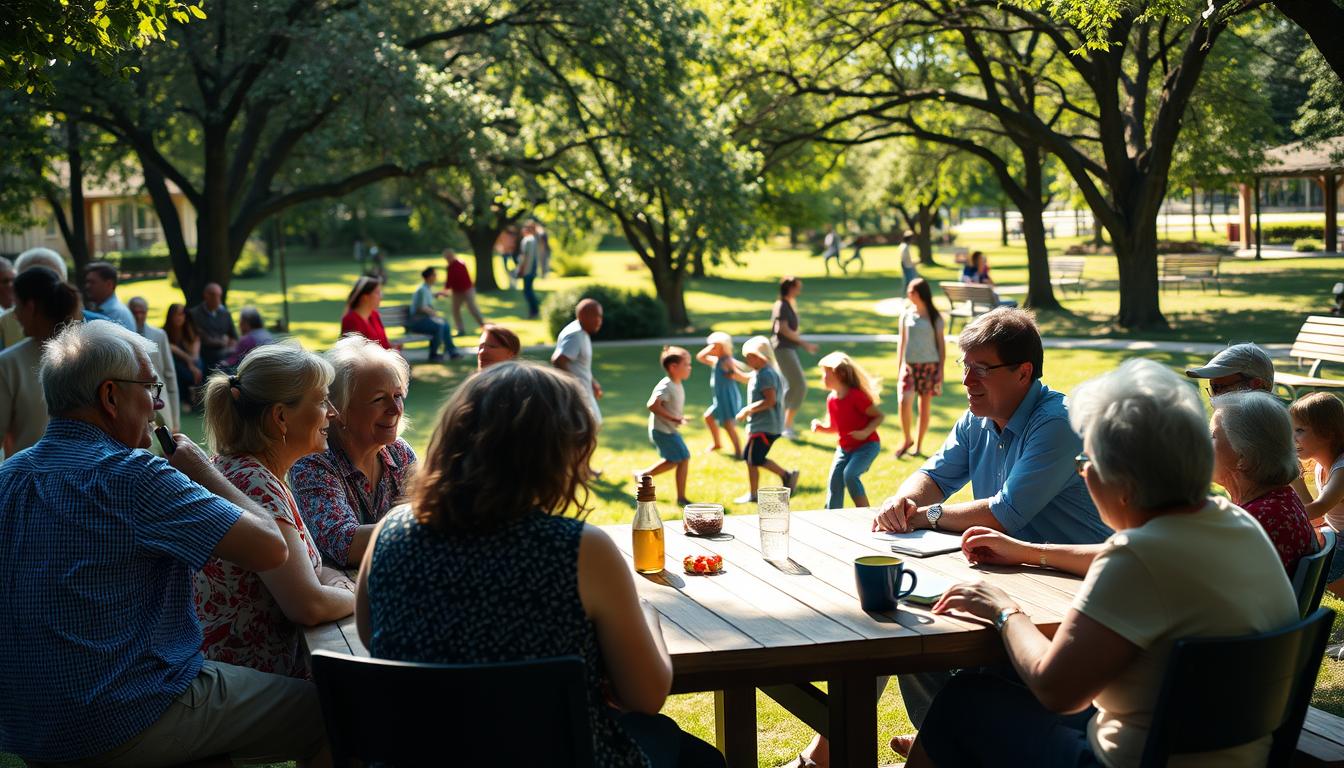
Cultivating a Community of Support: building a community of support and understanding
In today’s increasingly disconnected world, the importance of fostering empathy and community engagement cannot be overstated. A support system, defined as a network of people providing practical or emotional support, is crucial for individual well-being.
Cultivating a supportive community can positively impact individuals’ lives, providing a sense of belonging and connection. By coming together, individuals can share experiences, offer guidance, and foster a deeper understanding of one another.
Key Takeaways
- Community engagement is vital for individual well-being.
- Fostering empathy helps create a supportive community.
- A support system provides practical and emotional support.
- Cultivating a community promotes a sense of belonging.
- Shared experiences strengthen community bonds.
What Defines a Community of Support and Understanding
A community of support and understanding is vital for individuals to feel connected and valued. Such a community is built on several foundational elements that foster a sense of belonging among its members.
Key Elements of Supportive Communities
Supportive communities are characterized by several key elements that work together to create an environment where members feel supported and understood.
Trust and Psychological Safety
Trust is the foundation upon which supportive communities are built. When members trust one another, they feel secure in sharing their thoughts and feelings without fear of judgment. Psychological safety is equally crucial, as it allows members to be vulnerable and authentic, knowing that their emotions and experiences will be respected.
Shared Experiences and Goals
Communities that share common experiences or goals tend to have stronger bonds among their members. This shared context provides a basis for understanding and empathy, facilitating deeper connections.
The Difference Between Support and Understanding
While often used interchangeably, support and understanding have distinct meanings within a community context. Support refers to the act of providing encouragement or assistance, whereas understanding involves empathizing with another’s perspective or experience. Both are essential for a community to thrive.
- Support involves providing help or comfort to community members.
- Understanding involves empathizing with the experiences and perspectives of others.
The Benefits of Building a Community of Support and Understanding
A community that supports and understands its members can have a profoundly positive impact on their well-being. Research has shown that having a support system is linked to multiple positive benefits, including higher levels of well-being and better coping skills.
Psychological Benefits of Belonging
Being part of a supportive community can enhance an individual’s mental health by providing a sense of belonging and reducing feelings of isolation. Members feel valued and understood, which can lead to improved self-esteem and overall happiness.
Social Impact of Supportive Communities
Supportive communities not only benefit individuals but also have a broader social impact. They foster community engagement and promote a culture of understanding and empathy.
Reduced Isolation and Loneliness
One of the significant advantages of a supportive community is the reduction in feelings of loneliness and isolation. Members can connect with others who share similar experiences, creating a social support network that is vital for emotional well-being.
Increased Resilience During Challenges
Members of a supportive community are more likely to develop resilience when facing challenges. The community provides a safety net, offering support and guidance during difficult times, thereby enhancing their ability to cope.
By cultivating understanding and support within a community, we can create a robust network that benefits everyone involved. This not only improves individual well-being but also contributes to a more compassionate and connected society.
Identifying Your Community’s Purpose and Values
Understanding the core values and purpose of a community is vital for fostering empathy and building strong relationships among its members. A well-defined purpose and set of values serve as the foundation for effective community building efforts.
Defining Clear Community Goals
Clear community goals provide direction and motivation for members. These goals should be specific, achievable, and aligned with the community’s overall mission. By setting clear objectives, communities can foster a sense of purpose and unity among members.
Establishing Shared Values and Principles
Shared values and principles are essential for creating a cohesive community. These values guide member behavior and decision-making, ensuring that the community remains true to its mission. Building relationships based on shared values helps to foster a sense of belonging and cooperation.
Creating a Community Mission Statement
A community mission statement encapsulates the community’s purpose, goals, and values into a concise statement. It serves as a guiding document for community activities and decisions. By creating a clear and compelling mission statement, communities can inspire and motivate their members to work towards a common objective.
Creating Safe and Inclusive Spaces
Inclusivity and safety are not just ideals but necessities for building a resilient community. A safe and inclusive environment encourages members to participate fully, fostering a sense of belonging and support.
Physical vs. Digital Community Spaces
The choice between physical and digital community spaces depends on the community’s needs and goals. Physical spaces offer face-to-face interactions, which can be beneficial for building strong, personal connections. On the other hand, digital spaces provide accessibility and flexibility, allowing members to participate from anywhere.
Both types of spaces have their advantages and can be used complementarily to create a more inclusive environment.
Accessibility Considerations
Ensuring that community spaces are accessible to all members is crucial. This includes considering physical accessibility for in-person meetings and digital accessibility for online platforms.
- Providing wheelchair ramps and accessible restrooms in physical spaces
- Ensuring digital platforms are compatible with screen readers and other assistive technologies
Establishing Community Guidelines
Clear community guidelines are essential for maintaining a safe and inclusive environment. These guidelines should outline expected behaviors and consequences for harmful actions.
Addressing Harmful Behaviors
Addressing harmful behaviors promptly and fairly is vital. This includes having a clear process for reporting incidents and taking appropriate action.
Community engagement is enhanced when members feel safe and supported, leading to a more vibrant and resilient community.
Fostering Meaningful Connections Among Members
Meaningful connections among community members are the foundation upon which successful communities are built. To achieve this, it’s essential to implement strategies that encourage bonding and a sense of belonging.
Structured Activities for Building Relationships
Structured activities play a significant role in building relationships among community members. These can range from social events to collaborative projects.
Icebreakers and Team-Building Exercises
Icebreakers and team-building exercises are effective ways to initiate connections among members. They help in creating a relaxed atmosphere where members can interact freely.
For instance, a community might organize a volunteer day where members work together on a project. This not only fosters teamwork but also creates a sense of accomplishment.
Encouraging Vulnerability and Authenticity
Encouraging members to be vulnerable and authentic is crucial for deepening connections. When members feel safe sharing their experiences, it builds trust and strengthens bonds.
“The willingness to be vulnerable is a sign of strength, not weakness. It’s in those moments of openness that we truly connect with others.”
The Role of Active Listening
Active listening is a fundamental aspect of building strong relationships. It involves fully concentrating on what the other person is saying, understanding their perspective, and responding thoughtfully.
| Key Elements | Description | Benefits |
|---|---|---|
| Maintaining Eye Contact | Directly looking at the speaker | Shows engagement and interest |
| Avoiding Interruptions | Letting the speaker finish their thoughts | Ensures the speaker feels heard |
| Reflective Responses | Responding with understanding and empathy | Builds trust and rapport |
By incorporating these practices, communities can foster a culture of empathy and understanding, leading to stronger, more meaningful connections among members.
Developing Leadership and Sustaining Engagement
Effective community leadership is the backbone of a thriving social support network, enabling members to feel connected and valued. To achieve this, communities must focus on developing leadership and sustaining engagement among their members.
Identifying and Nurturing Community Leaders
Community leaders are essential for driving initiatives and supporting members. To identify potential leaders, communities should look for individuals who demonstrate a strong commitment to the community’s purpose and values. Nurturing these leaders involves providing them with the necessary training, mentorship, and opportunities to grow.
Creating Opportunities for Contribution
Members are more likely to remain engaged when they have opportunities to contribute to the community. This can be achieved by offering various roles and tasks that cater to different skills and interests. By doing so, communities can foster a sense of ownership and responsibility among their members.
Maintaining Long-term Participation
To maintain long-term participation, communities must recognize and appreciate their members’ efforts. This can be done through various strategies, including:
Recognition and Appreciation Strategies
- Publicly acknowledging members’ contributions
- Offering rewards or incentives for outstanding service
- Creating a sense of community through shared achievements
By implementing these strategies, communities can cultivate a culture of cultivating understanding and support, ultimately leading to a more engaged and committed membership.
Overcoming Challenges in Community Building
Establishing a strong community requires overcoming numerous hurdles, from conflict to burnout. Effective community building efforts involve addressing these challenges head-on to foster a supportive environment.
Addressing Conflict and Disagreement
Conflict is inevitable in any community. Fostering empathy and understanding among members can help resolve disputes. Encouraging open communication and active listening are key strategies in managing conflicts.
Managing Growth and Change
As communities grow, they face new challenges. It’s essential to adapt community strategies to accommodate the changing needs of its members. This might involve revising community guidelines or expanding community activities.
Preventing Burnout Among Members and Leaders
Burnout can significantly impact community building efforts. Ensuring that responsibilities are distributed fairly and that members have time to rest is crucial. Recognizing the contributions of members and leaders can also help prevent burnout.
By addressing these challenges proactively, communities can continue to thrive. Building relationships and fostering a sense of belonging are ongoing processes that require dedication and empathy.
Conclusion: Nurturing Your Community for Lasting Impact
Building a community of support and understanding is a continuous process that requires effort and dedication. By cultivating understanding among members, you can create a safe and inclusive environment that fosters meaningful connections and promotes community engagement.
As highlighted in various studies, community building plays a crucial role in student engagement and performance. By nurturing your community, you can ensure a lasting impact that benefits both individuals and the community as a whole.
Effective community building involves creating opportunities for contribution, addressing conflict, and managing growth. By doing so, you can maintain long-term participation and keep your community engaged. Focus on building a community of support and understanding to reap the benefits of a strong, connected community.